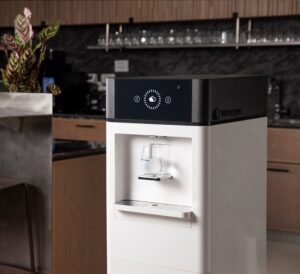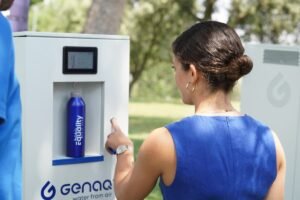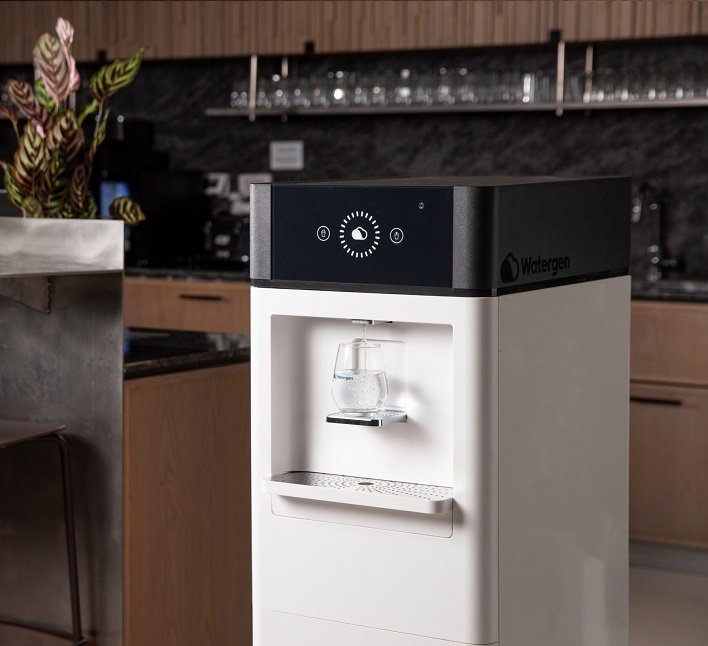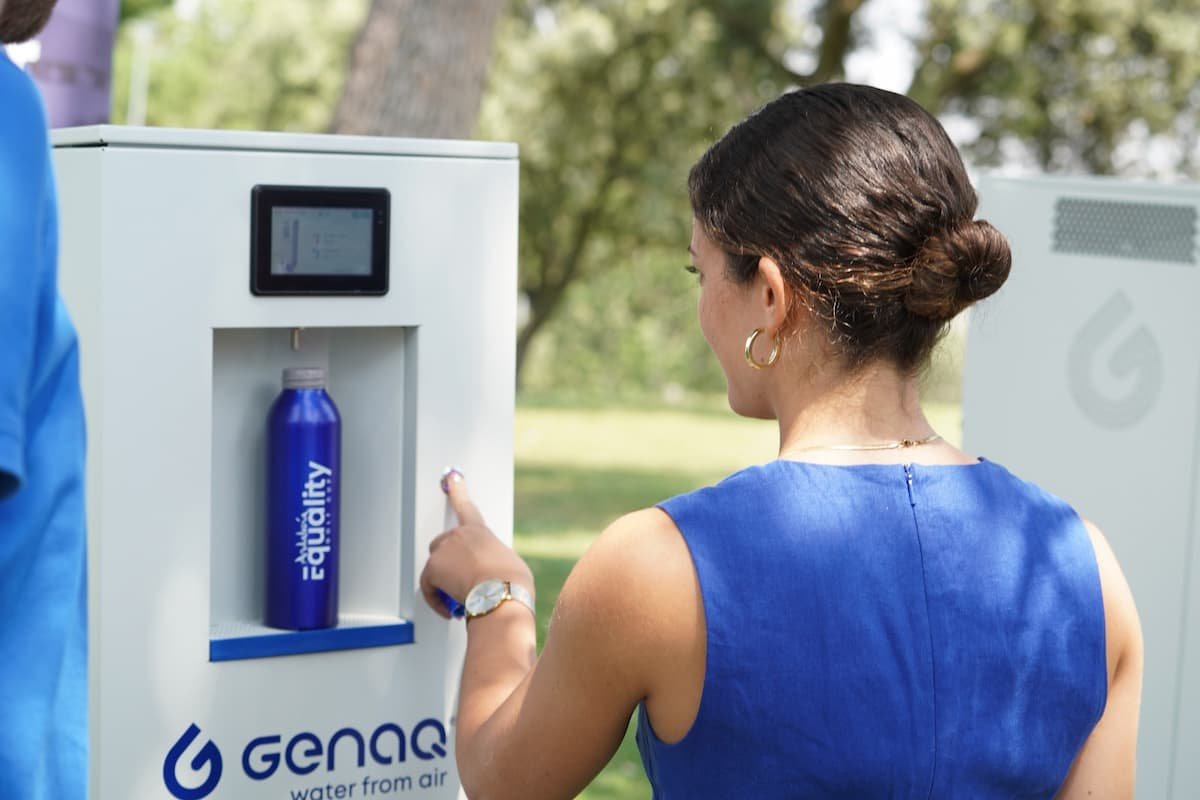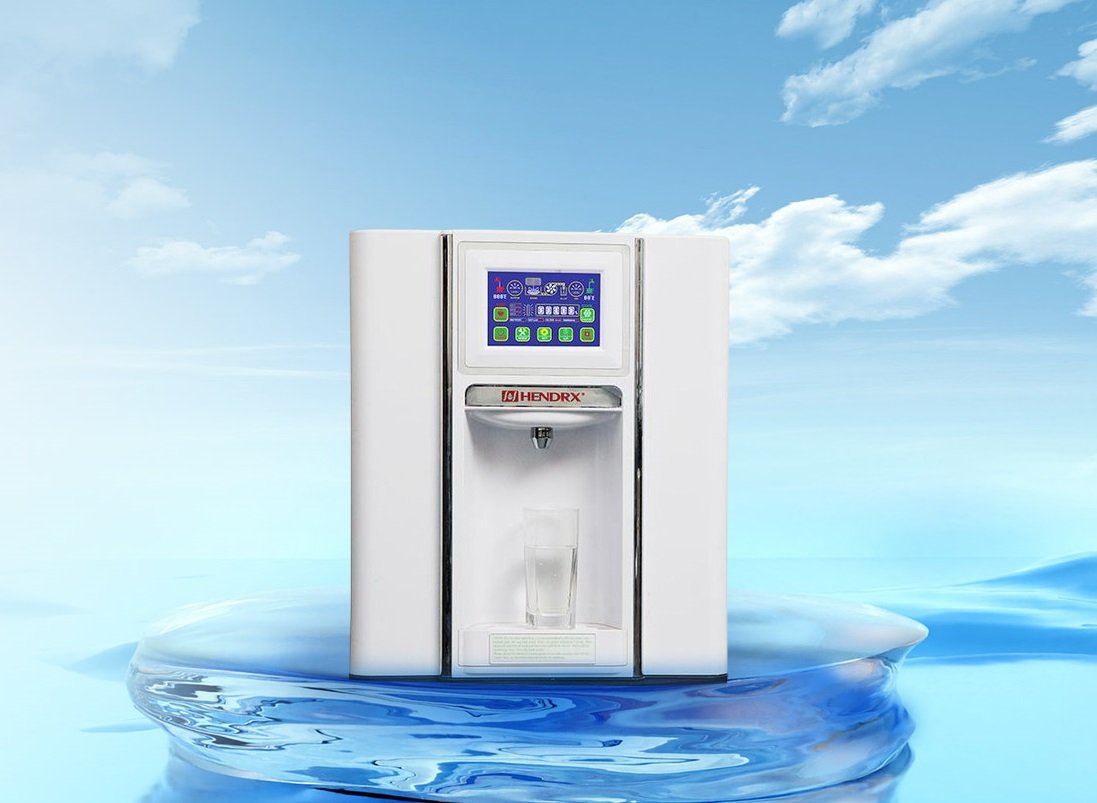
This device can produce pure water directly from the ambient air. A technology that, drawing on the natural water cycle, turns the invisible humidity around us into a precious resource — water — available anywhere and at any time.

During the natural water cycle, water evaporates from the sea, from lakes or even from the ground when it is hot. That vapour rises, cools at altitude and forms clouds. Once they are saturated, they produce rain or snow. The water then falls back to earth, feeds rivers and lakes, and returns to the sea…
Access to good-quality drinking water is one of the greatest challenges of the 21st century. In many regions of the world, resources are limited, polluted or hard to transport. Faced with these issues, the atmospheric water generator is an innovation drawing more and more attention.
The principle behind atmospheric water generators
To understand how it works, we can lean on a phenomenon we have all observed: morning dew. When the temperature drops, the humidity contained in the air condenses and settles as fine droplets on leaves or grass. The atmospheric water generator rests on the same principle, but in a controlled, engineered setting.
In practice, the unit starts by drawing in the ambient air. That air is cooled in order to trigger the condensation of the water vapour it contains.
The droplets formed this way are then collected and passed through a series of filters designed to remove impurities, fine particles and any bacteria. Depending on the model, this purification can combine several processes: activated carbon filters, ultraviolet light, and even mineralisation to improve the taste and nutritional quality of the water.
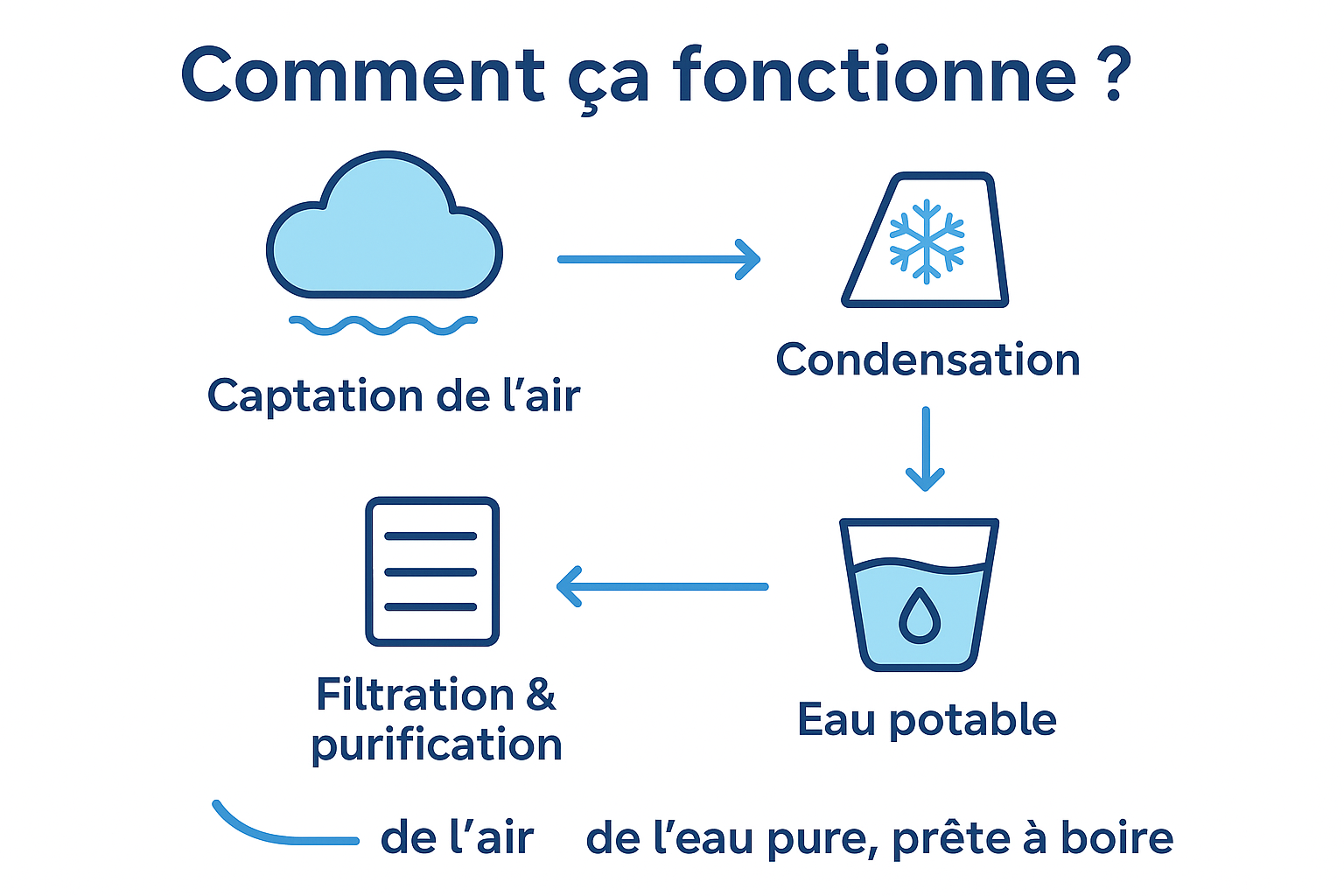
Finally, the resulting liquid is stored in a sealed tank, ready to be drunk like any spring water.
So, from a simple stream of air, the generator delivers fresh, pure water, free of chemical additives, that meets drinking water standards.
In short, from air, the atmospheric water generator produces pure water, ready to drink.
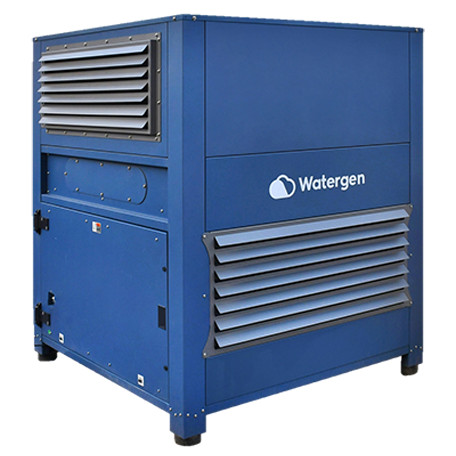
Units suited to different uses
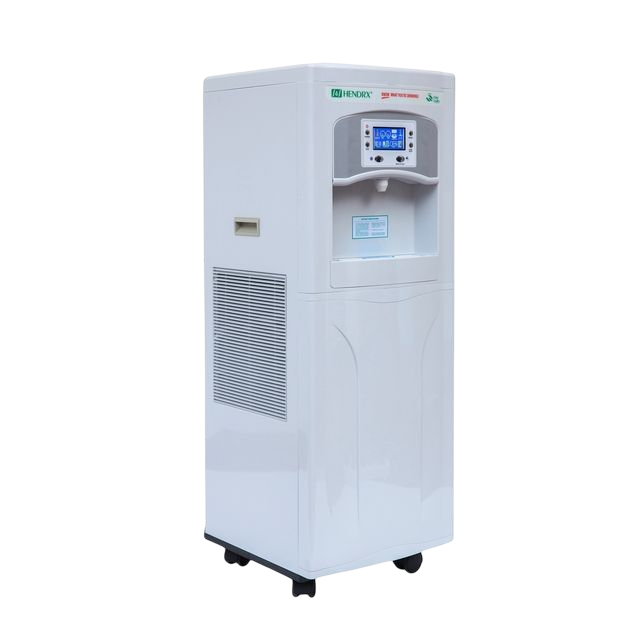
There are several categories of atmospheric water generator, varying in size and production capacity.
The smallest models, designed for domestic use, can supply several litres a day, enough to cover the needs of a household or a small office.
To install such a model at home, our complete user guide details every step, from purchase to maintenance.
Larger professional models are designed to supply restaurants, schools or hospitals, where demand for drinking water is higher and more constant.
Finally, at the other end of the spectrum are industrial generators, capable of producing several thousand litres a day. These play an essential role in humanitarian contexts, whether supplying a refugee camp or providing a rapid solution after a natural disaster.
A promising solution, but not without limits
The success of this technology rests on several advantages.
It delivers complete drinking water autonomy, independently of existing infrastructure.
It also considerably reduces plastic use, since it avoids the production, transport and disposal of millions of single-use bottles.
The water produced is monitored and of high quality, often purer than that of many urban networks.
Finally, when the unit is paired with renewable energy, it can operate even in remote areas, with no conventional power grid.
But this innovation also has its constraints.
The first is energy consumption: condensing and cooling air takes electricity, which can represent a significant cost depending on the capacity of the unit.
Output also depends heavily on climate conditions: the warmer and more humid the air, the greater the production. In very dry areas, the volume of water generated can be limited.
Finally, the initial investment remains relatively high depending on the use case, even if costs are tending to fall as the technology becomes more widespread.
A revolution already under way
Despite these challenges, the atmospheric water generator is already finding many applications. In urban households, it appeals to families keen to drink healthier water, without relying on the tap or on plastic bottles. In offices and businesses, it is becoming an ecological and economical alternative to water coolers. In humanitarian work, it saves lives by rapidly supplying an essential resource in emergency contexts. Even armies and scientific expeditions use it, because it removes the need to transport heavy water reserves.
The future could strengthen that role further. By combining this technology with solar or wind power, generators will become fully self-sufficient and more environmentally friendly. They could then establish themselves as one of the major answers to global water stress, alongside desalination and wastewater recycling.
Towards new access to drinking water
Turning air into drinking water is therefore no longer a dream: it is a reality already being deployed. This innovation opens a new path, where every household, every business and every community could produce its own water, independently of traditional infrastructure. More than a technological feat, it is a promise of autonomy and sustainability.
This development is part of a long technical trajectory: discover the history of generating water from air, from the first dew collectors to modern generators.
Understanding how an atmospheric water generator works already means opening up to the idea that part of the solution to global water challenges is right around us, in the air we breathe.