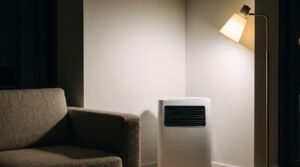
In Guadeloupe, Martinique, Réunion and Mayotte, tap water regularly stops flowing and bottled water costs far more than in mainland France. Yet these territories also offer the most favourable conditions there are for producing water from air. Here is what the figures actually say.
1. Access to water that cannot be taken for granted
In Guadeloupe, rotating cut-offs — known locally as tours d’eau — have been part of daily life for years, mainly in Grande-Terre. The prefecture acknowledges an ageing distribution network, with losses that can reach 60 % of the water produced. In March 2024, following acts of sabotage on the installations, nearly 130,000 users lost their supply at once.
In Mayotte, the 2023-2024 crisis was of a different scale. The water rotations already in place were tightened from the summer of 2023, then stepped up in November. From 20 November 2023, the French state extended bottled water distribution to the entire population of the department.
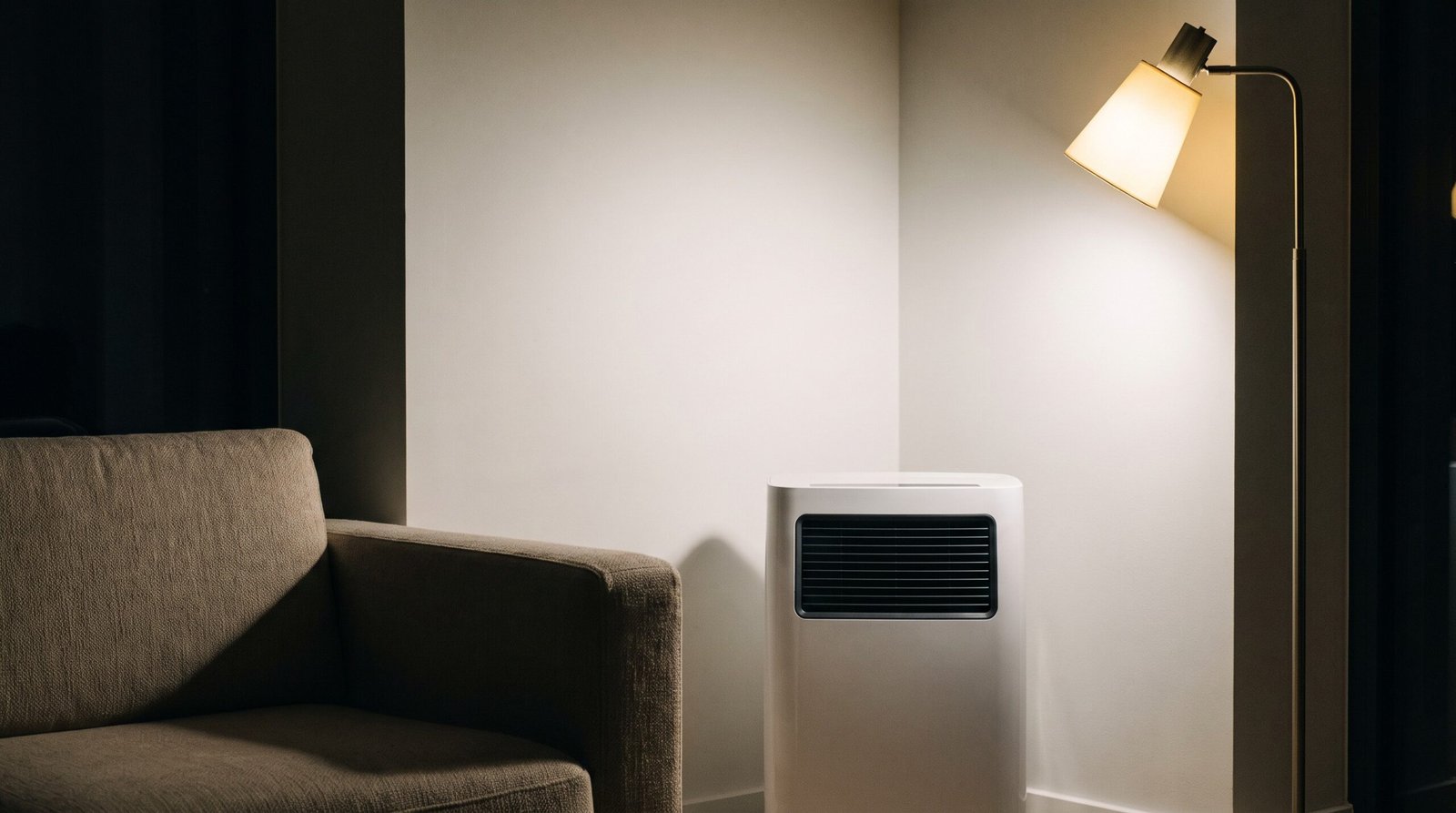
This context changes how an atmospheric water generator should be judged. In mainland France, the machine mainly answers a search for independence or for better water quality. Overseas, it answers a question of continuity first: having drinking water on the days the tap gives nothing.
2. A tropical climate is the best ground for this technology
An atmospheric water generator condenses the water vapour held in the air. Its output therefore does not depend on relative humidity alone, but on the amount of water actually present in each cubic metre of air — what physicists call absolute humidity. This is where the French overseas territories stand clearly apart.
NASA climate normals (POWER, 2001-2025 averages) give the following annual mean relative humidity and temperature:
| Location | Relative humidity | Temperature | Water held in the air |
|---|---|---|---|
| Pointe-à-Pitre (Guadeloupe) | 77.9 % | 27.1 °C | 20.1 g/m³ |
| Fort-de-France (Martinique) | 77.3 % | 27.4 °C | 20.4 g/m³ |
| Mamoudzou (Mayotte) | 75.8 % | 27.0 °C | 19.5 g/m³ |
| Réunion (grid cell at 533 m) | 78.1 % | 21.7 °C | 14.9 g/m³ |
| Paris | 81.4 % | 10.9 °C | 8.1 g/m³ |
The result is counter-intuitive, and that is the whole point of the table: Paris has the highest relative humidity of the five, and by far the least water in its air. Cold air saturates quickly, but it saturates with very little water. In Pointe-à-Pitre, every cubic metre of air holds roughly two and a half times more water than in Paris. Even at the height of a Parisian July, the gap is still a factor of two.
Two honest caveats. First, the grid cell used for Réunion sits at 533 metres above sea level: the warmer coast comes closer to Caribbean values. Second, these annual averages hide the seasons. In Mayotte, the air goes from about 21.8 g/m³ in January to 16.8 g/m³ in August — close to a quarter less in the dry season, precisely when the resource is scarcest.
These conditions do not cancel out the differences between machines. The output a manufacturer advertises is measured under specific conditions that always need checking: our article on how to choose a model sets out which ones to look at.
3. What the local economy changes in the calculation
The other half of the equation is financial, and it points the same way.
According to INSEE (2022 spatial price comparison survey), food products — a category that includes bottled water — cost 42 % more than in mainland France in Guadeloupe, 40 % in Martinique, 39 % in French Guiana, 37 % in Réunion and 30 % in Mayotte. Across all spending, the gap ranges from 9 % in Réunion to 16 % in Guadeloupe.
But not everything costs more. INSEE notes that in Réunion, housing-related charges, water and electricity included, are on the whole cheaper than in mainland France. That is the decisive point: the heavy expense is exactly the one a generator replaces — water bought in bottles — while the expense that runs the machine, electricity, carries no penalty.
In other words, the payback calculation that applies in mainland France, which we set out in our article on the price of an atmospheric water generator, tips in the machine’s favour faster in these territories. It still has to be done with your own figures: your household’s real consumption, the local price of a pack of water, and the power draw of the model you pick.
4. The limits to weigh before buying
Power cuts. A generator produces nothing without electricity, and cyclones sometimes take down both networks at once. That is the main argument for solar or off-grid models, which keep running when everything else stops.
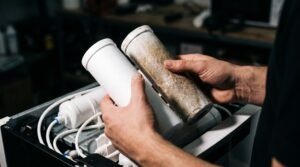
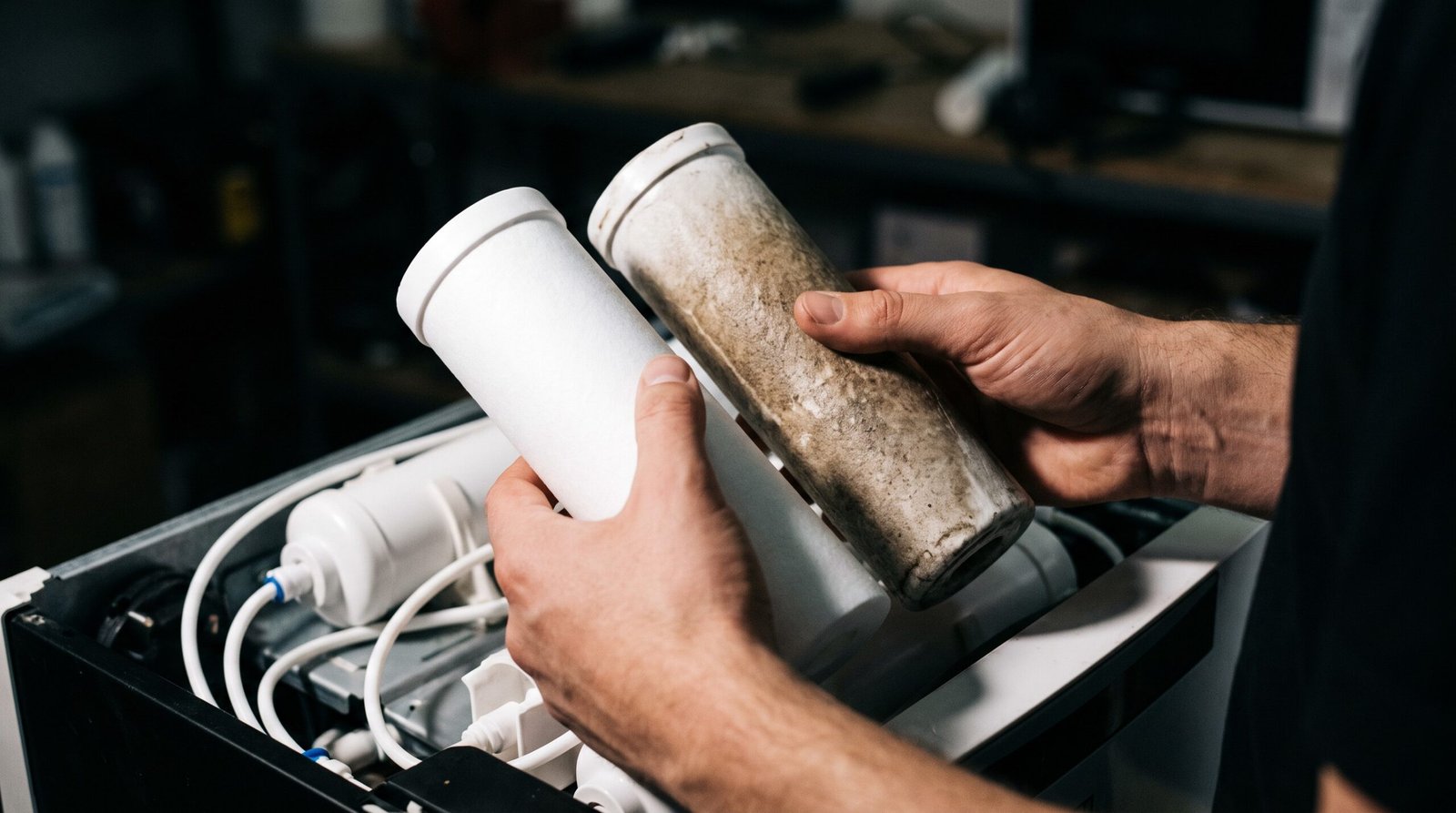
Maintenance, more demanding than elsewhere. Constant heat and humidity put more strain on filters and UV lamps. A poorly maintained machine produces lower-quality water, or none at all. The maintenance video tutorials show concretely what that involves: changing UV lamps, cleaning and replacing filters, opening the front cover.
The quality of the water produced. Condensation alone does not guarantee potability: the downstream treatment does. We explain this in detail in why condensation water is not always pure.
The regulatory framework. It is the same as in mainland France, since these territories are French departments. Our guide to the regulations applies in full.
Conclusion
France’s overseas departments combine the three conditions that make an atmospheric water generator relevant: air holding twice as much water as in mainland France, markedly more expensive bottled water, and a network whose reliability is not guaranteed. That does not make it a universal solution, and certainly not a substitute for repairing public networks. But for a household living through rotating cut-offs, it is one of the few devices that produces drinking water without depending on either the tap or the supermarket.
Sources
- INSEE, In 2022, prices remained higher in the overseas departments than in mainland France, Insee Première no. 1958, July 2023.
- NASA POWER, Climatology API, monthly normals 2001-2025 (relative humidity and temperature at 2 m). Absolute humidity calculated from these values using the Magnus formula.
- Prefecture of Guadeloupe, The water problem in Guadeloupe.
- French Government, Water crisis in Mayotte: bottled water for every inhabitant, November 2023.
- IHEMI, The water crisis in Mayotte 2023-2024.