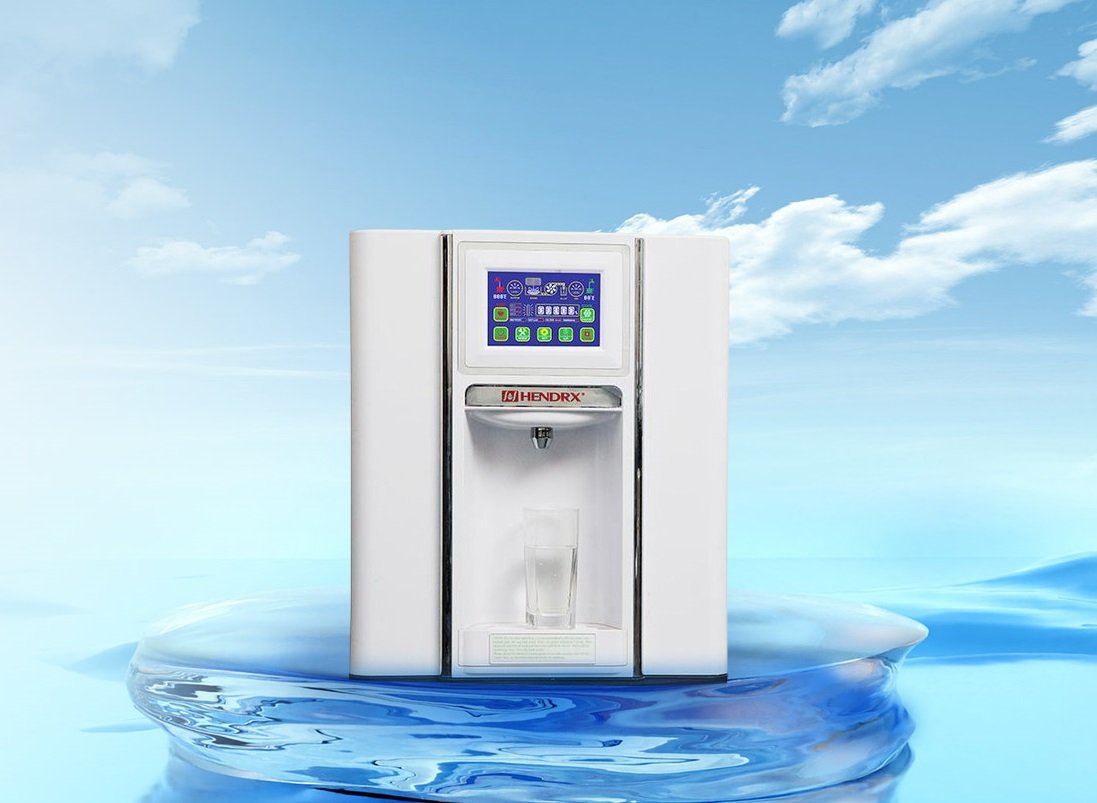
There are several technologies for atmospheric water generation. They are presented here in an English summary of the video “Atmospheric Water Generation Technologies” (Asianometry).
How do you extract water from air?
This video sets out the different options available to us.
The report describes the various methods that exist for extracting the water present in the air. It dates from May 2023 but is fairly exhaustive on these methods and clear in its approach.
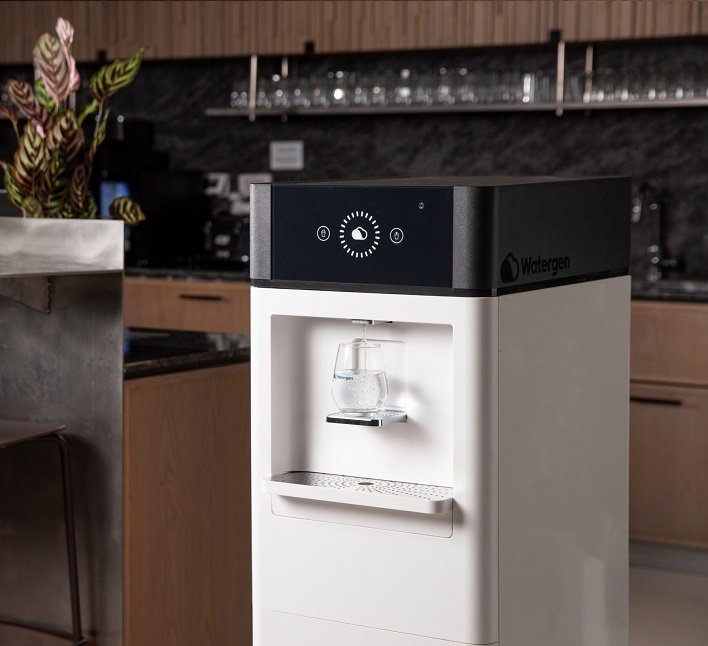
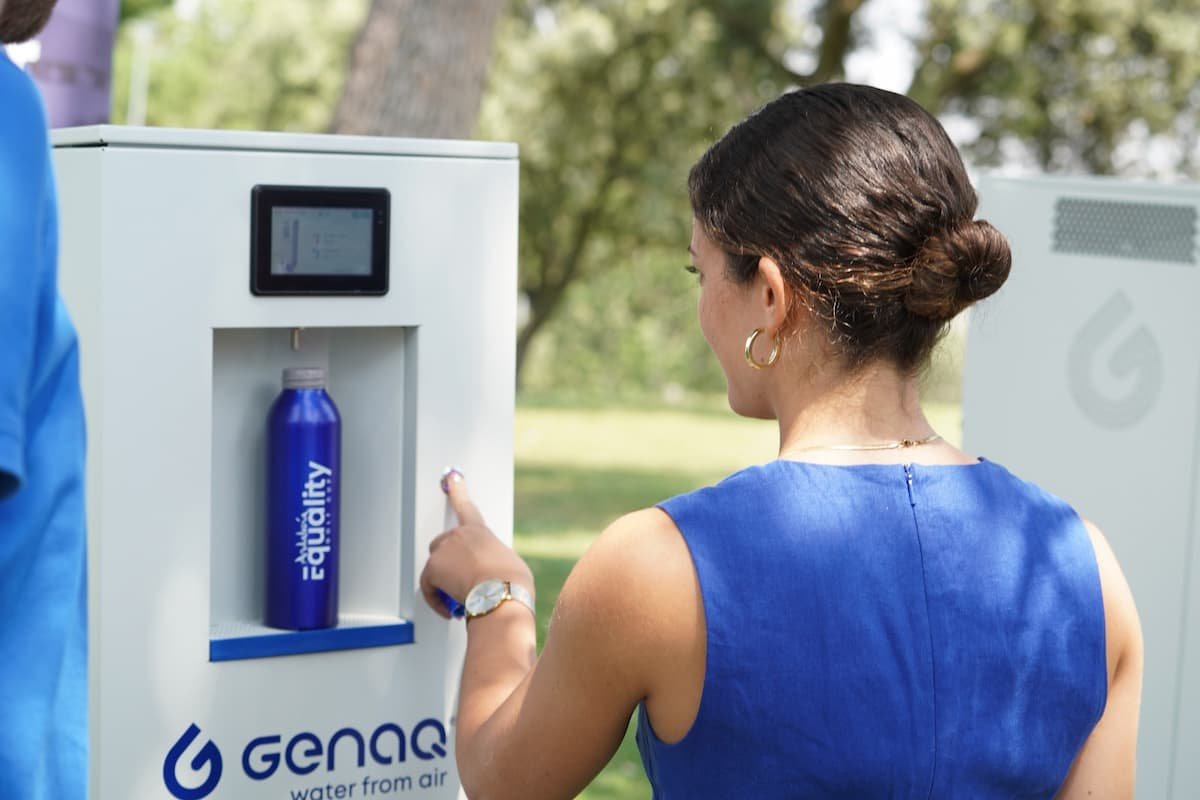
The technology is moving fast, and there are now reliable atmospheric water generators able to supply pure, drinkable water with low energy consumption.
Turning air into water: the different methods
Luke Skywalker’s adoptive family were “moisture farmers”.
We never learn exactly what their work involved, but their installations looked impressive.
We will probably never build real blasters, star cruisers, hyperdrives, brilliant droids or lightsabers… but water farms drawing on the air — is that possible?
Methods and machines for extracting water from air have existed for a long time.
The real question is whether they make commercial and industrial sense.
In this piece, we explore atmospheric water generation at commercial scale.
The water present in the air
The Earth holds around 1.4 quintillion tonnes of water.
Only 2.5% is fresh water. And nearly 70% of that fresh water is locked in glaciers, ice caps and icebergs.
Most of the rest sits in groundwater and reservoirs.
That leaves only 0.4% of total water in the form of lakes, rivers, marshes, soils… and in the atmosphere.
The atmosphere is estimated to contain around 50,000 km³ of fresh water as vapour, six times more than the water in all rivers combined.
That water is continuously renewed by the water cycle, which moves nearly 45.5 trillion tonnes of vapour every year.
Unlike desalination, capturing this water destroys no marine ecosystems and produces no hyper-saline discharge.
But the big question remains: can it really be captured economically and at scale?
Fog harvesting
The earliest extraction attempts relied on fog.
The principle is simple: accelerate the formation and growth of micro-droplets until they are large enough to be collected.
In nature, some animals already use this process. A beetle in the Namib desert, for example, collects humidity thanks to special bumps on its back.
Fog nets draw on these natural models.
They consist of large meshes (often Raschel weave) stretched to face the wind.
Cost: around $100 to $200 per square metre depending on materials.
The problem: output depends enormously on the climate. In Oman, 30 litres of water per m² was reached during the monsoon… but only two months a year.
What is more, the harvested water often contains dust and salt, and needs treatment.
In short, it is a cheap, passive technique, but not scalable to meet year-round needs.
Absorbent materials (desiccation)
Another approach uses sorbents (silica, zeolites, activated alumina, etc.).
These materials absorb water vapour, and are then heated (often with solar energy) to release the water.
Advantages: well-understood processes, relatively affordable materials.
Limits: absorption can take a whole night, and a great deal of material is needed to produce at scale.
It remains interesting, but heavy to industrialise.
Active cooling (refrigeration)
This is the best-known method: cooling the air to its dew point to trigger condensation.
It is the principle behind dehumidifiers and air conditioners.
In practice: humid air is cooled as it passes over an evaporator, the water condenses, and is then collected.
Small portable machines can produce around twenty litres a day.
Large industrial units can reach 200,000 litres a day.
But the capital cost varies enormously (from a few hundred to several thousand euros).
This method is effective above all in hot and humid regions: tropical coastal cities such as New Orleans, Mombasa, Perth, or certain Middle Eastern cities.
Condensate from air conditioning systems (HVAC)
Our air conditioners already produce water: condensate.
In theory, that water could be reused, but it is often contaminated (dust, bacteria, metal residues).
It therefore has to be treated (filters, UV, chlorination, reverse osmosis, and so on) before it can be made drinkable.
Even without full treatment, this water can serve non-potable uses: watering, cooling, cleaning, toilets…
It is an interesting avenue for urban recycling.
Peltier effect devices
Another idea rests on the Peltier-Seebeck effect: an electric current cools one face of a module.
By passing humid air over that cold surface, you get condensation.
These devices have the advantage of being compact, with no moving parts and no refrigerant gases.
But they remain slow, low-powered, and still need fans or accessories that can fail.
One major challenge: energy
Whatever the process, producing water from air takes a lot of energy.
It is estimated that 500 to 850 Wh of electricity are needed to generate one litre of water (often closer to 500 Wh).
As a result, the price of atmospheric water depends directly on the cost of electricity.
To date, it cannot compete with tap water.
In certain contexts, however (Dubai, San Diego, Aruba, for example), it can be an interesting alternative to bottled water.
One promising avenue is to power these systems with renewable energy (solar, wind, nuclear).
Conclusion
Atmospheric water generation is not a miracle solution.
It remains limited by energy costs and by local climate conditions.
However, in hot and humid regions, or for non-potable uses (such as recycling air conditioning condensate), these technologies can play a complementary role.
They will not replace desalination or large-scale infrastructure, but they can provide a valuable supplementary source in certain areas under water stress.