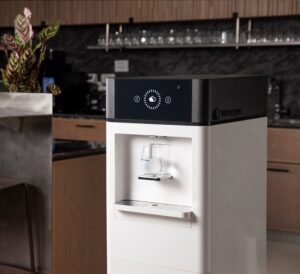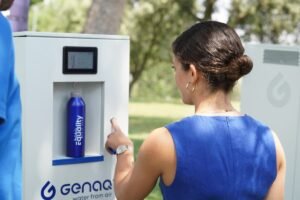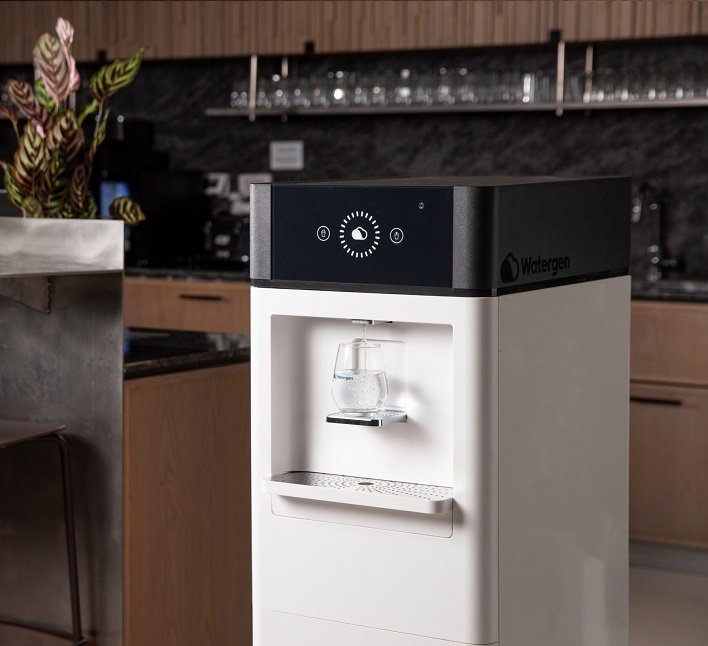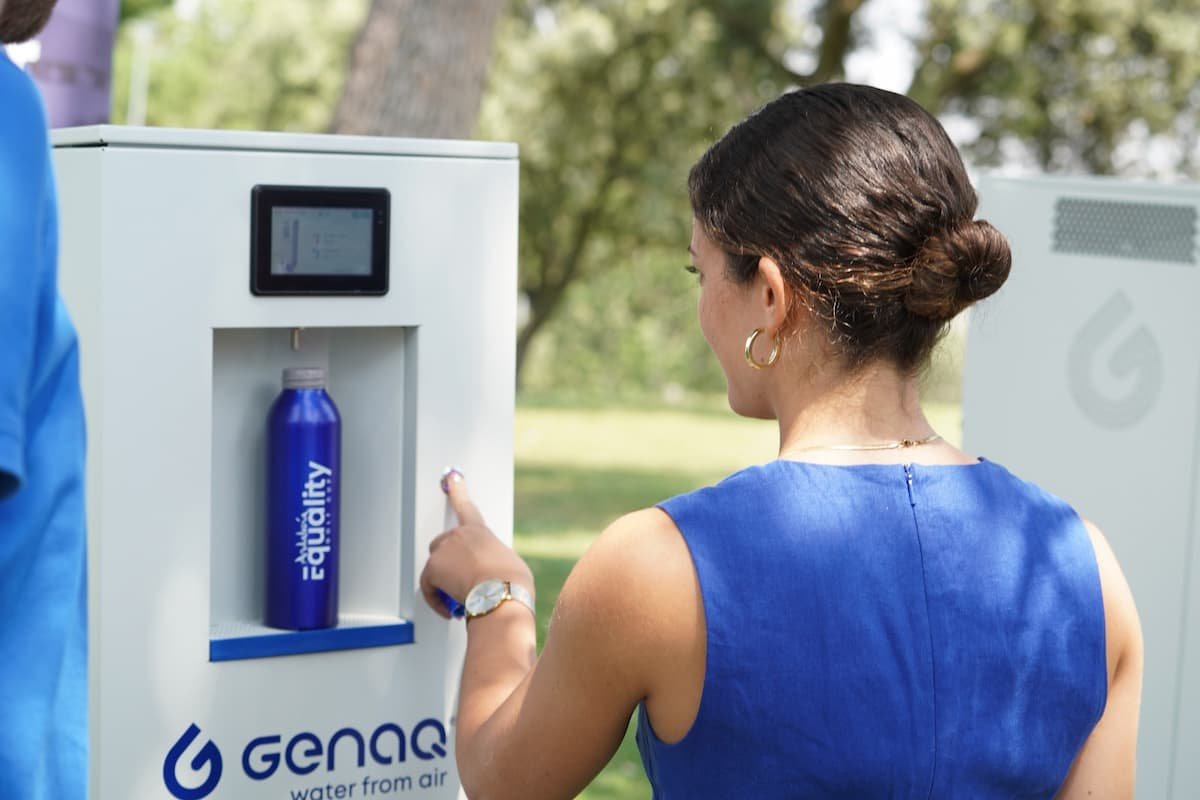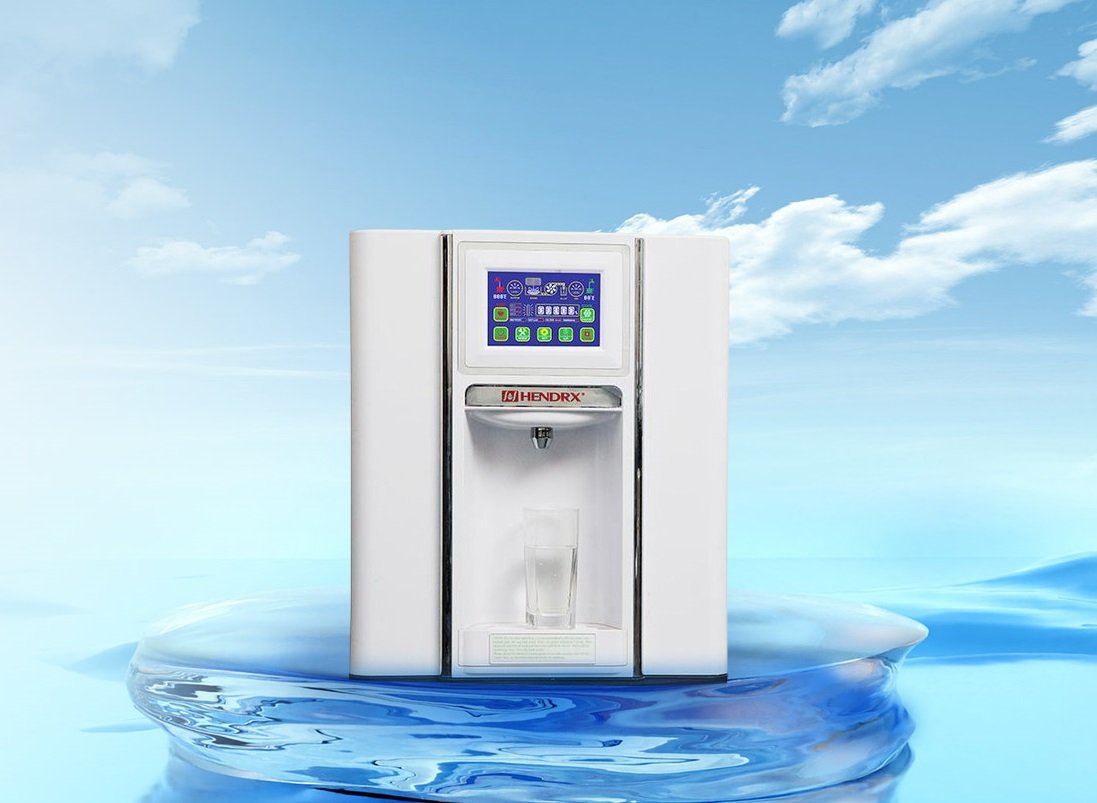
For a very long time, humans have taken inspiration from nature to obtain water when the resource was not directly accessible — in particular by recovering the moisture present in the air. Over time, the idea of generating water from air led to exploiting the principle of condensation. Condensation techniques were then built into devices called atmospheric water generators, which supply pure, drinkable water from the surrounding air.
In the beginning: harvesting dew from the sky
Long before machines, ancient peoples knew that the air carried an invisible richness within it: water.
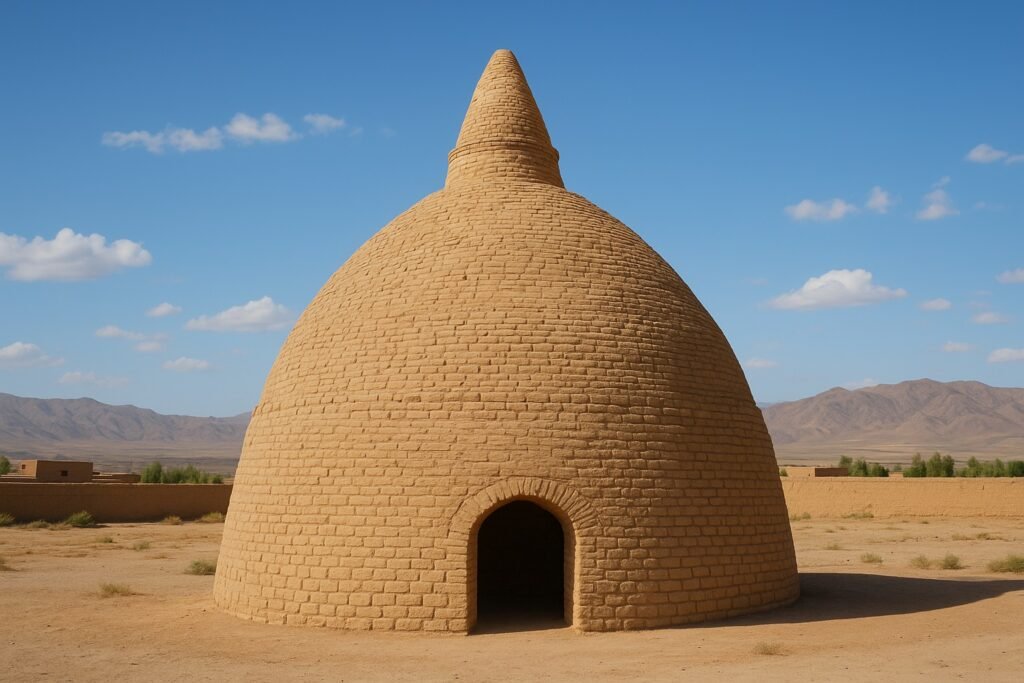
In the coastal deserts of Peru, fishermen would see their nets beaded with droplets at daybreak. In Morocco, stones laid on the ground were used to trap dew. In Persia, the engineers behind the yakhchals — those vast earthen domes built to store ice — had worked out how to channel the winds so as to condense the night-time humidity.
Later, in the Canary Islands, people revered the “fountain trees”. The most famous of them, on the island of El Hierro, captured mist in its branches and released a trickle of fresh water to the ground — enough for an entire village to survive on.
From antiquity onwards, humanity already knew that the air could quench its thirst.
The first industrial dreams (19th – early 20th century)
In the 19th century, the age of the machine began. Compressors and refrigeration systems appeared. Some visionary engineers then wondered: what if we could manufacture artificial dew?
Patents described “atmospheric condensers” using cooled metal plates. But the technique remained costly, heavy and inefficient. Producing a single glass of water demanded more energy than an entire boiler.
At the time, water still flowed in abundance from rivers and fountains, so nobody saw the point of investing in this slightly mad dream. The idea therefore lay dormant.
Wartime needs (1940s–1960s)
Then came the Second World War. The armies sent into the African desert faced a vital question: how do you supply water to thousands of soldiers far from any source?
In military camps, strange machines were tested. They looked like metal crates bristling with pipes which, by cooling the air, extracted meagre quantities of water from it. Intrigued, the soldiers watched these prototypes weep their small drops. The idea gained ground: it is possible.
During the Cold War, the American army and the USSR kept investing in the idea of generating water from air, since having drinking water without infrastructure could prove strategic.
The age of inventors (1980s–2000s)
As refrigerators and air conditioners improved, the idea was reborn in the imagination of inventors.
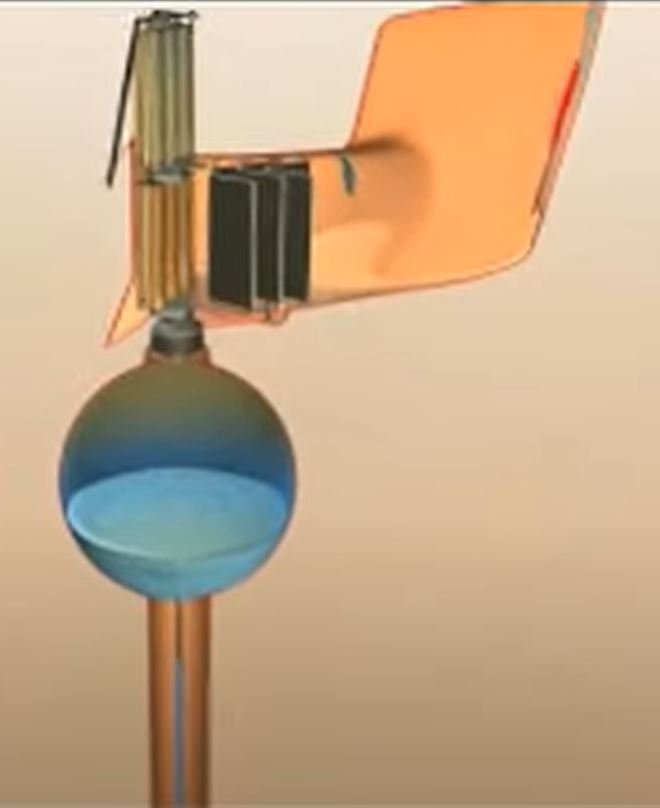
One of the best known is the Australian Max Whisson. A doctor by training, in the 1990s he dreamed of machines capable of supplying the isolated villages of his arid country. His invention, the Whisson Windmill, is a genuine piece of technological poetry: a wind turbine whose blades are designed to condense the moisture in the wind. Instead of producing electricity, it produces water.
In other countries, lone inventors were also tinkering with prototypes. In the United States, some imagined “drinking-water fridges”. In Israel, researchers tested mobile units able to resupply soldiers with water in the field.
By the end of the 20th century, the atmospheric water generator was no longer a dream: it had become a credible avenue.
The start-up revolution (2000–today)
The 21st century marked a turning point. Water became a global issue. Droughts, migration, natural disasters: everywhere, new sources were being sought.
Innovative companies stepped forward:
- In Israel, Watergen, founded in 2009, impressed the world by supplying drinking water during humanitarian disasters.
- In the United States, EcoloBlue offered domestic machines that look like office water coolers but produce their own water.
- In India and Africa, engineers developed solar models adapted to isolated villages.
Two technologies came to the fore:
- Condensation by cooling, like an air conditioner that makes water spring forth.
- Absorbent materials (salts, zeolites, MOFs), which trap moisture even in dry air and then release it in liquid form.
Today, researchers are working to cut energy consumption and to combine these systems with solar or wind power so that they can run autonomously.
An invention with no single inventor
Unlike the aeroplane or the light bulb, the atmospheric water generator has no single “founding father”. It is a collective and progressive invention, born of ancestral observation, engineers’ dreams, military necessity and the creativity of modern inventors.
It is the story of a universal idea: turning the air we breathe into the water that keeps us alive.