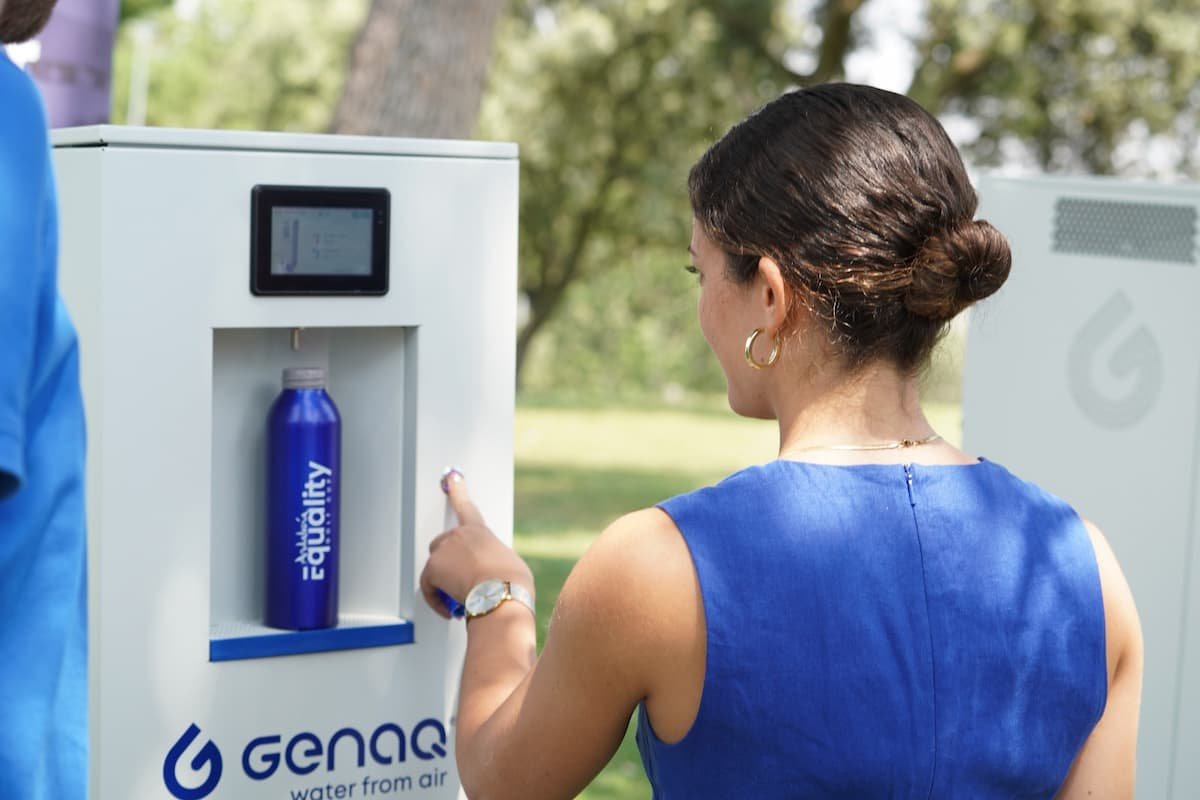
To date, no French or European regulation specifically covers atmospheric water generators. In its opinion of 4 November 2024, ANSES recommends that the regulatory framework should evolve, while reminding owners that the holder of the device remains legally responsible for the quality of the water it produces.
Regulation around the atmospheric water generator is evolving. In November 2024, ANSES (the French Agency for Food, Environmental and Occupational Health & Safety) published a reference opinion on the subject. Here is what to take away from it for domestic or professional use in France.
- A regulatory framework still incomplete in France
- The November 2024 ANSES opinion: the key points
- Required authorisations: market placement and fixed installations
- The owner, legally responsible for water quality
- The existing voluntary standards
- What it changes in practice for a domestic or professional purchase
A regulatory framework still incomplete in France
To date, producing water intended for human consumption by condensing atmospheric vapour is not explicitly provided for in French regulation. The provisions of the public health code relating to water safety therefore do not all apply automatically to this type of device, which does not exempt manufacturers and users from general product safety obligations. For comparison, mains water is subject to health monitoring covering more than 60 microbiological and chemical parameters, carried out by the regional health agencies (ARS) under the public health code (Centre d’information sur l’eau) — a level of oversight that does not yet exist for atmospheric water generators.
The November 2024 ANSES opinion: the key points
Referred by the Directorate General for Health at the end of 2022, ANSES issued its opinion on 4 November 2024 following a collective expert appraisal. Its main conclusions:
- French regulation, like European regulation, does not yet specifically cover atmospheric water generators (AWGs).
- Water treatment standards designed for conventional resources (groundwater, rivers) are not always suited to atmospheric condensate, whose composition depends heavily on ambient air quality.
- Available data on the real effectiveness of treatment chains (filtration, UV, osmosis) remains limited, which prevented the agency from carrying out a full health risk assessment.
- ANSES recommends that the regulatory framework evolve to take account of the specific features of this technology.
These conclusions echo the issues of condensation water purity that we had already covered: without suitable filtration and remineralisation, water captured from the air is not automatically drinkable.
Required authorisations: market placement and fixed installations
ANSES recommends that mobile units for domestic or collective use should be subject to a market authorisation application, under the innovative processes provisions of the public health code. Larger fixed installations would fall under a prefectural authorisation. These procedures remain to be clarified by the authorities, but they indicate the direction the sector’s oversight is likely to take in the coming years.
The owner, legally responsible for water quality
An important point for any buyer: the public health code considers anyone producing water intended for human consumption to be a water supplier. In practice, the owner of an atmospheric water generator remains responsible for the quality of the water they produce and drink, including for strictly domestic use. On that basis, ANSES recommends taking out a maintenance contract with a qualified professional and having at least one microbiological analysis carried out each year, a good practice already covered in our user guide.
The existing voluntary standards
In the absence of a dedicated French or European standard, two American frameworks are sometimes used voluntarily by manufacturers:
- NSF P343: assesses the safety of materials in contact with water and the disinfection capability of the unit.
- ASSE/ANSI 1090: tests the production rate, energy efficiency, microbiological quality and material safety.
According to ANSES, these standards, while useful, are not on their own enough to guarantee the complete safety and effectiveness of a device. They nonetheless serve as an indicator of seriousness worth checking among the criteria for choosing an atmospheric water generator.
What it changes in practice for a domestic or professional purchase
In practice, this opinion does not call into question the use of atmospheric water generators, but it does call for vigilance: favour a manufacturer able to supply clear technical documentation, detailed filtration monitoring and a serious maintenance contract. For professional use, these requirements matter all the more because water supplier responsibility also applies to companies and local authorities. The regulatory framework is set to evolve in the years ahead; we will update this article as official publications appear.
Yadlo is the independent reference website on atmospheric water generators in France — no sales, no conflict of interest, only honest information grounded in hands-on field experience.