Introduction
We often hear that condensation water is perfectly pure, made up only of H₂O molecules. The idea is appealing: imagining that every raindrop is virgin water, born solely from water vapour. The reality, however, is quite different.
In nature, a drop of water is never born alone. It needs a support, interacts with the surrounding air and quickly absorbs chemical compounds. The result: water from atmospheric condensation is not chemically pure.
Conversely, in a controlled environment — such as an atmospheric water generator — condensation can produce water very close to distilled water.
So, is condensation water really pure? Let us unpack this natural and technological phenomenon.
The H₂O molecule: intrinsically pure but never alone
Definitions and context
A water molecule, H₂O, is pure by definition: it contains neither pollutant nor impurity. But in the atmosphere, water vapour never condenses on its own.
The role of condensation nuclei
To go from vapour to liquid, water molecules need condensation nuclei, tiny solid or liquid particles suspended in the air. Without them, no droplet could form.
In other words, from the moment a raindrop is born, it already contains something other than water: a particle at the heart of its structure.
Condensation nuclei: supports and carriers of pollution
Where the nuclei come from
These nuclei come from very diverse sources:
- Mineral dust: silicates, clays, soil particles.
- Sea salts: sodium, magnesium and potassium chloride.
- Combustion particles: from road traffic or industry.
- Pollen, spores and microplastics: suspended in the air.
Hygroscopic properties and impact
Many of these particles are hygroscopic, meaning they attract water. They therefore help condensation along, but they are not always neutral: some already contain polluting substances. So from the moment it forms, a raindrop is influenced by the quality of the surrounding air.
Droplet growth: an aqueous solution from birth
Once started, the droplet keeps growing by capturing new water molecules, but also various atmospheric gases and pollutants.
Gas absorption
- Carbon dioxide (CO₂): makes rain slightly acidic (pH ≈ 5.6).
- Sulphur dioxide (SO₂) and nitrogen oxides (NOₓ): form strong acids (H₂SO₄, HNO₃), responsible for acid rain.
- Ammonia (NH₃): can partly neutralise that acidity.
Particle capture
The droplet also picks up other particles: pesticides, heavy metals, industrial dust or microplastics.
In reality, a raindrop is a genuinely complex aqueous solution, mixing water, dissolved gases and suspended particles.
Natural condensation vs artificial condensation
Atmospheric condensation
- Formation on heterogeneous nuclei (dust, pollen, microplastics).
- Rapid absorption of gases and polluting particles.
- Result: water that is more or less polluted depending on the environment (rural, urban, industrial).
Controlled condensation
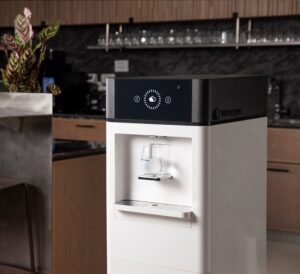
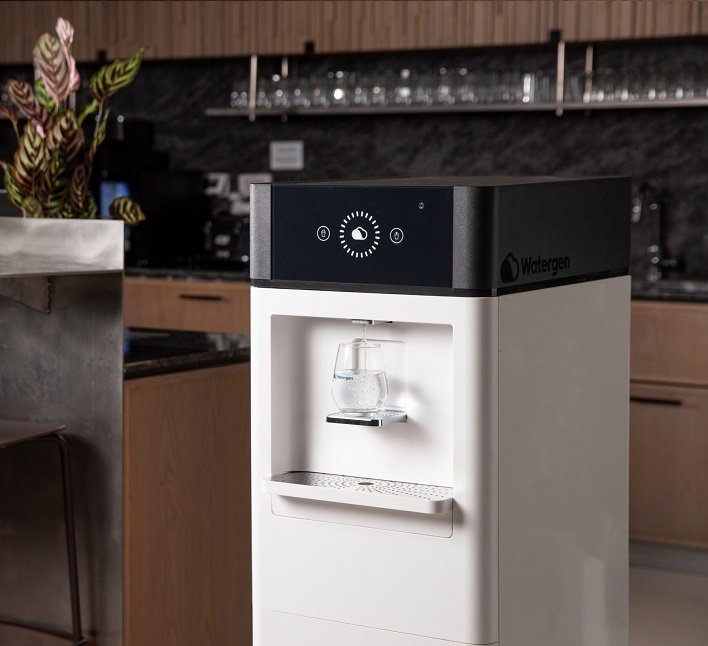
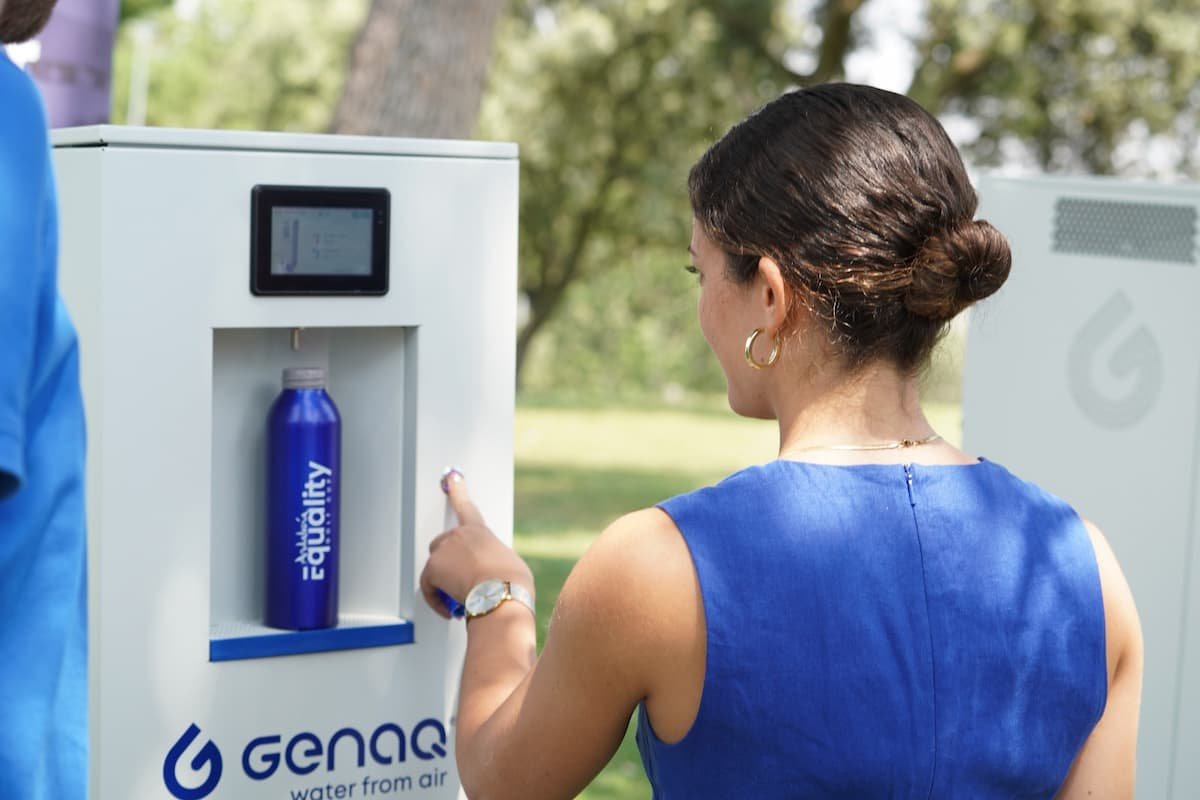
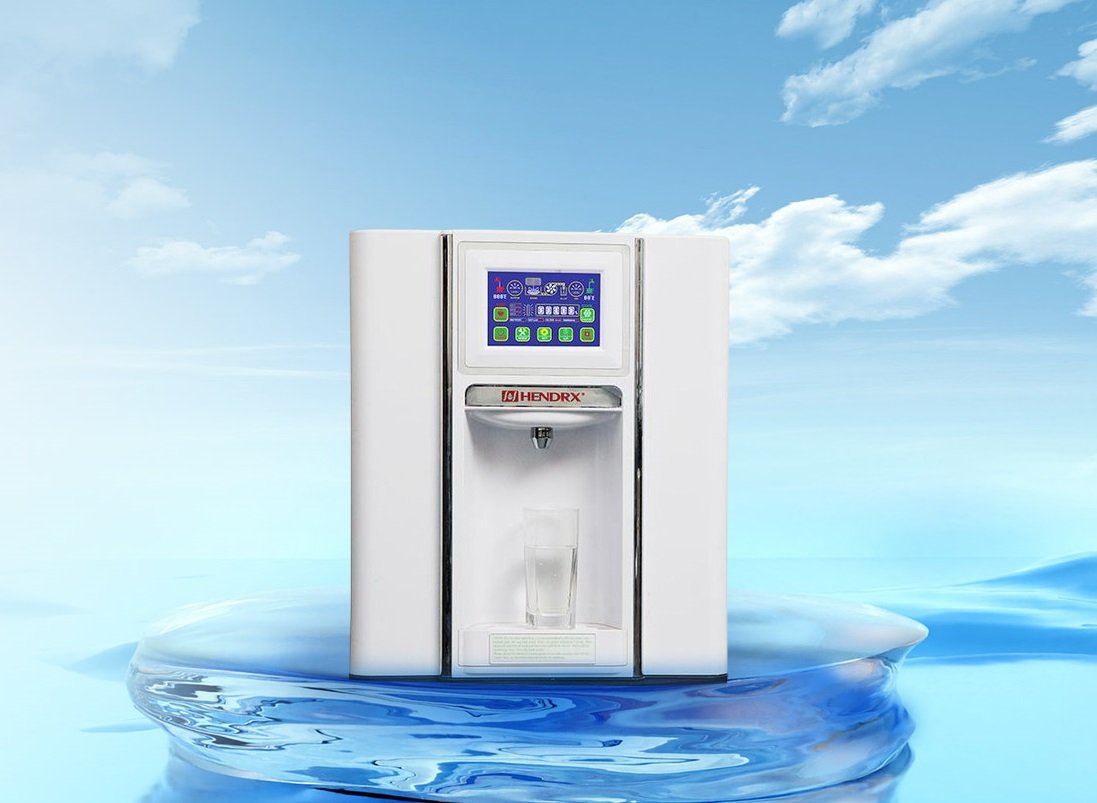
In an atmospheric water generator, vapour condenses on cold, clean surfaces, shielded from pollutants.
- No solid particles: homogeneous condensation.
- The water obtained is close to distilled water, of high chemical purity.
- It then needs remineralisation to balance its taste and nutritional quality.
This approach is used in many regions to produce drinking water sustainably, particularly where natural resources are scarce.
Implications for drinking water and health
Raw rainwater
Not drinkable without treatment: it can contain micro-organisms, heavy metals, pesticides and other atmospheric pollutants.
Water from controlled condensation
Drinkable if the system is well designed: filters, UV and remineralisation ensure its quality.
With rare exceptions, this water is purer than tap water, while remaining neutral from a health standpoint.
An essential distinction
Natural water is not always drinkable as it is, whereas water from controlled condensation is safe, compliant with drinking water standards and secure for human consumption.
Conclusion
Condensation does not automatically create pure water. In nature, every drop is born around a particle and absorbs various gases and substances.
Rain, though vital for ecosystems, is never chemically virgin. By contrast, modern technologies of controlled condensation make it possible to obtain water close to distilled water, which is then remineralised before consumption.
The belief that a raindrop is pure at birth is a scientific myth. Understanding the physics and chemistry of condensation means making better use of the water cycle and the innovative solutions that flow from it.
FAQ
Is a raindrop pure when it forms?
No. From the moment it forms, a raindrop builds around a solid particle and absorbs atmospheric gases and pollutants.
Why does condensation water pick up pollutants?
Because atmospheric condensation depends on condensation nuclei and on the surrounding air, both rich in chemical compounds.
Does an atmospheric water generator produce drinkable water?
Yes, if it is well designed: modern systems filter, purify and remineralise the condensed water so that it meets health standards.
How do you make rainwater drinkable?
It has to be filtered, disinfected (UV or chlorination) and remineralised before consumption.